
Today’s orthodontic treatment options include traditional metal braces, clear ceramic braces, custom 3D-printed braces, and clear aligners. Each uses controlled forces to gradually move the teeth, but they differ in appearance, comfort, treatment capabilities, and the amount of patient participation required.
Many patients begin their consultation with a particular option in mind, often based on a friend’s experience or a preference for less noticeable treatment. That is a helpful starting point, but the right choice also depends on your bite, treatment complexity, lifestyle, and goals.
Here is what distinguishes each option and what you should consider before choosing your treatment.
How Braces Move Teeth
Whatever the appliance, the biology is identical. Light continuous pressure on a tooth causes the bone around it to remodel, dissolving slightly ahead of the movement and rebuilding behind it. Bone needs time to do that, which is why treatment is measured in months and why more force does not mean faster results.
The differences between appliance types are about how that pressure is delivered and controlled, not about the underlying process.
The Four Options
Metal braces
Metal braces use durable stainless-steel brackets and wires for precise, reliable tooth movement, and can treat a wide range of concerns, including complex bite problems. Colored elastic ties let patients personalize their look. For patients with a nickel allergy, nickel-free titanium brackets are available, and Dr. Wakas reviews any metal sensitivities before treatment.
Clear ceramic braces
Ceramic braces use clear or tooth-colored brackets that blend in with your smile while providing the precise control of fixed treatment. The brackets are more brittle than metal, so they may need extra care with hard foods. Clear elastic ties can also stain between visits, especially with coffee, tea, or dark foods.
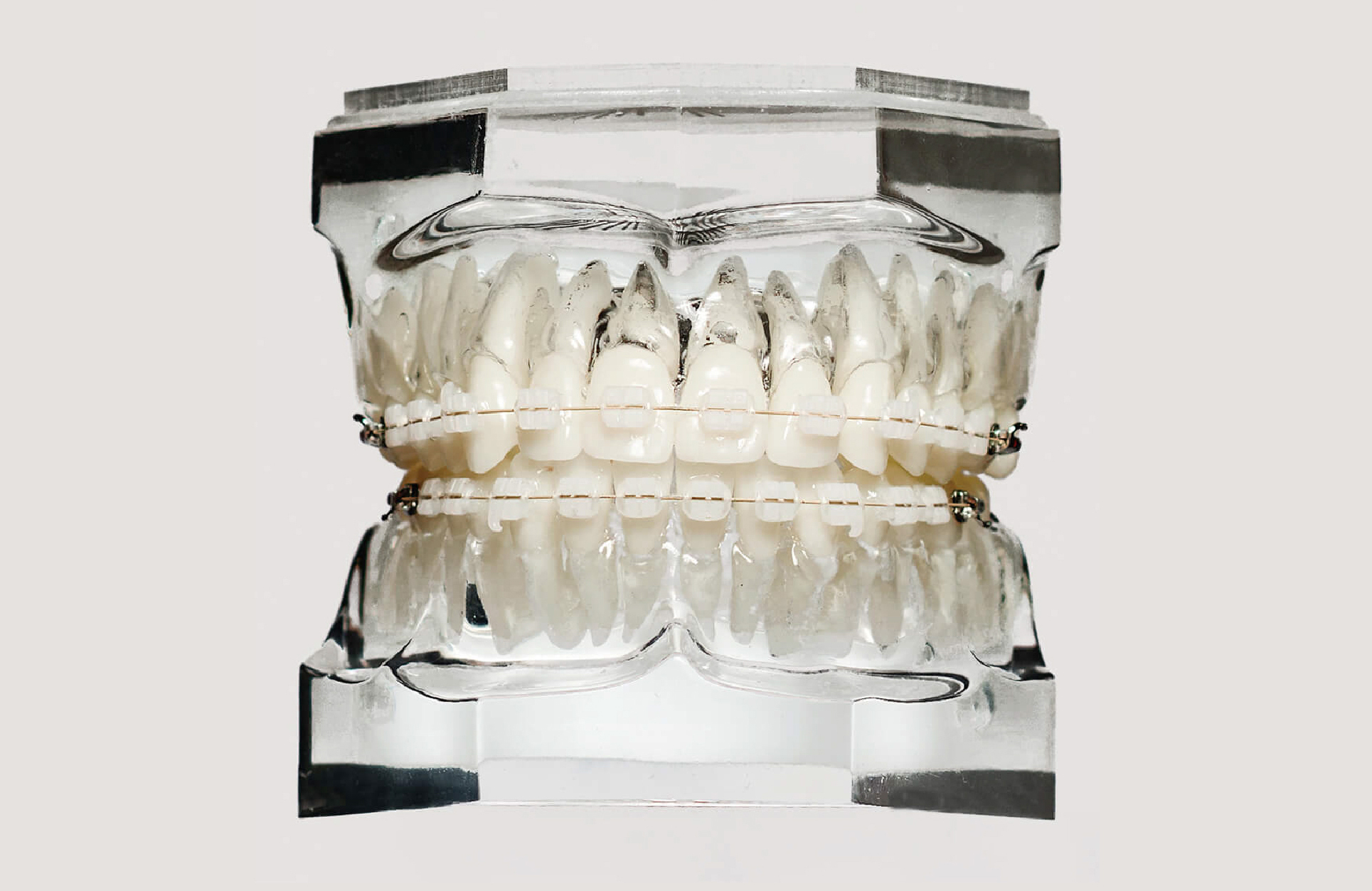
LightForce custom 3D-printed braces
LightForce brackets are custom designed for each tooth from a digital 3D scan, rather than selected from standard stock sizes. This provides a better fit, more precise placement, and generally fewer adjustment appointments. LightForce is the highest investment among our fixed options; learn more on our LightForce page.
Clear aligners
Clear aligners use a series of custom, removable trays to gradually move your teeth. Because they come out for eating, there are fewer food restrictions and oral hygiene stays simple. For best results, aligners must be worn 20 to 22 hours a day, and some cases use small tooth-colored attachments to help guide movement.
At a Glance
| Option | Visibility | Depends on compliance | Relative cost | Handles complex cases |
|---|---|---|---|---|
| Metal braces | High | No | Lowest | Yes, all |
| Ceramic braces | Low | No | Moderate | Yes, most |
| LightForce custom | Low | No | Highest fixed option | Yes, most |
| Clear aligners | Very low | Yes, heavily | Varies by system | Mild to moderate, some complex |
What We Do Not Offer, and Why
We do not currently provide lingual braces, which are bonded behind the teeth. They are genuinely invisible, and for the small number of patients who need that specifically they are a real option. They are also the most expensive appliance, the hardest to speak with initially, and the slowest to adjust. For nearly everyone who asks about them, ceramic braces or aligners get to the same place with less difficulty. If lingual treatment is truly what your case needs, we will tell you and help you find it.
How to Actually Choose
- Start with the case, not the appliance. Some cases genuinely rule options out. If yours is one of them, the choice is already narrower than you think, and finding that out is the first hour of a free consultation.
- Be honest about compliance. This is the question people answer optimistically. Aligners work beautifully when worn 20 to 22 hours a day, and we will help you decide whether that fits your routine.
- Then weigh visibility against cost. Once the clinically appropriate options are on the table, this is a personal decision and we will not push you on it.
- Ask what the fee includes. Records, adjustments, retainers, and repairs are not always bundled the same way. See cost and financing.
Questions About Braces Types
What is the cheapest type of braces?
Metal braces are consistently the least expensive fixed option, and for limited cases our in-house aligners come in lower still. Cost also depends heavily on how long treatment runs, so a cheaper appliance on a longer plan is not always the cheaper outcome. We quote a written fee for your case after examining you.
Which type of braces works fastest?
Case complexity determines treatment length far more than appliance choice does. Among the options, custom 3D-printed brackets often shave time off because bracket position is planned rather than adjusted for later. Metal and ceramic run essentially the same course.
Can you switch from one type to another during treatment?
Sometimes. Moving from aligners to braces mid-treatment is common enough when compliance is not working out, and it is better than letting a case stall. Going the other direction is easier late in treatment than early. Either way it changes the plan and usually the fee, so raise it early.
Do different types of braces hurt differently?
Not meaningfully. All of them are tender for a few days at the start and mildly sore after each adjustment or tray change. Fixed braces irritate the cheeks and lips for the first week or so, which aligners do not. Aligners can make teeth ache briefly with each new tray.
Find Out Which Type Suits You
A free consultation gives you an examination, a 3D scan, and a written plan naming the options that actually apply to your case. Call 813-867-0414 or request an appointment. We are at 10061 Beach Verbena Drive in Riverview.